Atria
GPJ · Work management
From planning to approval. A platform connecting work, teams and AI assistants, with control over every step.
Visit product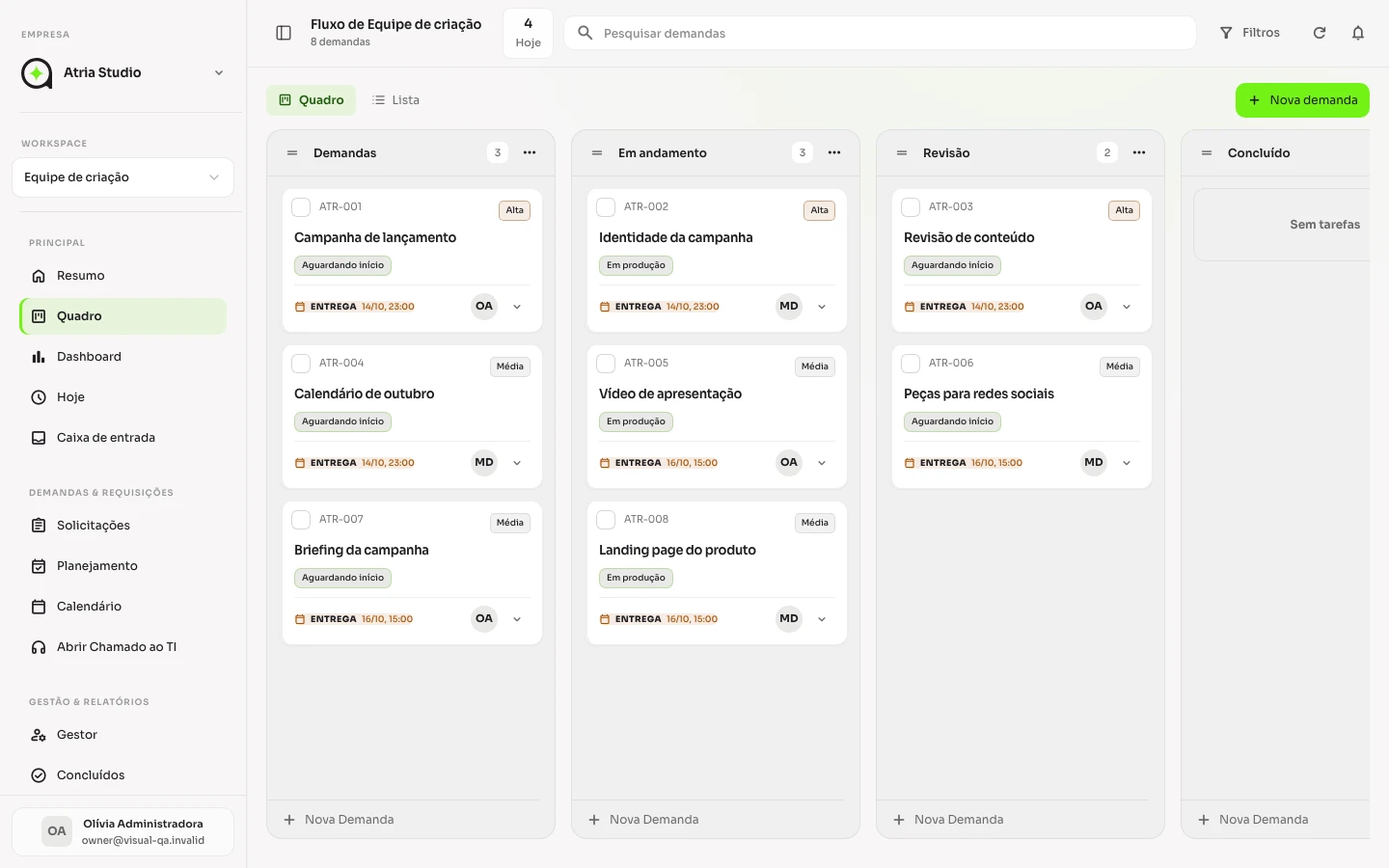 Real interface · demonstration data
The problem
Teams need to follow requests, dependencies, ownership and approvals without losing context between an initial request and its delivery. Atria brings that workflow into a multi-workspace application.
My contribution
Full-stack development of GPJ/Atria, covering interfaces, workflow rules, APIs, data modeling and assistant integration. This case describes features observed in the implementation and project documentation.
What the system does
- Task boards and lists, subtasks and dependencies.
- Planning, calendars, comments and protected attachments.
- Approvals, activity history and workspace permissions.
- MCP assistants that read authorized data and prepare action drafts.
Engineering decisions
Isolation follows the data.
A Prisma extension applies organization scope to data operations. Dedicated tests cover tenant isolation and workflow permissions.
Draft before confirmation.
MCP supports drafting tasks and plans. Confirmation happens in the application, keeping publication under the authenticated user’s control.
Connections with explicit scope.
OAuth with PKCE binds an assistant connection to its authorized workspace. Revocation, expiry and renewal are part of the access lifecycle.
Architecture in perspective
Atria
- React + TypeScript
- NestJS / REST / WebSockets
- Prisma + PostgreSQL
- MCP / OAuth / Workspace
Architecture overview
Technical overview based on the reviewed source. No customer data is shown.
Context and boundaries
A production product, as confirmed by the owner. The public URL opens the sign-in screen. Source code is private; case imagery uses demonstration data. This review describes the implementation without claiming adoption metrics or a production audit.
Discuss this projectNext project
Leve